Day 2
Imago Dei
The world has its ink and we are a page, and every stroke creates in us the script lines of our selves, a biography constructed by the words and actions of others: I am loved. I am unloved. I am capable. I’m a quitter. I am smart. I am dumb. I am beautiful. I am nothing… I am, I am, I am, I am. I am the result of a thousand words, ten thousand messages, twenty thousand looks, telling me who I am.
But who am I really?
Somewhere underneath, deep within the sinews of my heart, is there a me that wasn’t formed by the words and actions of others? And what if not all their words were true all along? Am I then a living lie? How do I know who I am, if all I have to go on are the cracked-mirror words of other fractured human beings reflecting broken images back to me of my self?
This broken world has a story for me to live in. My scarred history has a story for me to live out. But what is the story that I was born to live?
Human words can be a frail foundation on which to build a life. But what is the alternative? Alternative words outside of humans naming our humanity?
In the beginning of all things and the genesis of us, there was a story being written for us. There were words spoken over us.
But not by human beings.
“Then God said, “Let us make mankind in our image, in our likeness…”
Genesis 1:26
Genesis begins with the genesis of everything, everything large and small, endless and finite, all created simply by Gods word. Spoken words created everything in all of creation; “Let there be- and it was so”,“Let there be- and it was so”, “Let there be- and it was so”, “according to their kinds”, ‘‘according to their kinds”, ‘‘according to their kinds”.¹
All living creatures were created ‘according to their kind’. The author of Genesis uses the phrase ‘according to their kinds’ ten times preceding the creation of all living things.
Until us.
These repeated refrains didn’t repeat for us. We were not created ‘according to our kind’. The author of Genesis seemed intent on making this clear.
We were created differently.
To be different.
Like Him.
“Then God said, “Let us make mankind in our image, in our likeness, so that they may rule over the fish in the sea and the birds in the sky, over the livestock and all the wild animals, and over all the creatures that move along the ground.”
So God created mankind in his own image,
in the image of God he created them;
male and female he created them.”
Genesis 1:26-27
Image of God. Imago Dei. Say it in every language you can speak and write in on every sinew of your heart, because this simple string of letters lines a truth as mysterious as the existence of us.
Today we might read these words as if they were a normal thing to read, a normal thing to write, a normal thing to say. But there was nothing normal about these words. Not when they were written. Nor now when we read them. Though today we often miss it, the original author and the original audience, they would have understood.
This just doesn’t happen. This way.
We don’t happen. This way.
The term ‘Image of God’ was used back then in ancient times. Just not for us. Not for human beings born without royal blood. Only Kings or idols were given this title1. Ordinary people, well, they were just the staff, the workforce. Cogs in the system. ‘Image of God’ was an unmistakably royal title with royal connotations and to use it in this way, about all human beings, was a threat to any status quo which raised wealth, privilege and power above the masses.
The breath God breathed into us names us Human. Names us honoured. Names us equal. Names us royal. Together. Every one of us.
This statement would have shocked the Ancient world sending it reeling in disbelief. The truth of this statement still shocks our world, because for all our modernity, for all our rhetoric, we still live the script-line lie that we are not created equal- we raise some high while others dwell in dust. We live the lie that we are mud, that we are dirt, forgetting the Breath that brought the mud to life. His Breath in us.
For God to bestow this title on both men and women equally, in that culture at that time, which viewed women as property, a possession, as less. It was unheard of. Unthinkable. Dangerous.
These words, this statement explodes with fiery light into the darkness of ancient world assumptions with a truth as radical as it is mysterious.
The mystery of us. The mystery of Him in us.
Human.
Image of God.
And these three small words, they don’t just name us, they describe us- the true us, underneath all the layering scars we have accumulated through a life lived forgetting our true name. God didn’t breathe a label or job title into our lungs. He breathed Himself. His nature. His heart. The shape of our breath is the shape of Him, because our breath was His gift to us, the gift of Himself, His life, His image, coded into our DNA. His breath in us that awakens us to ourselves.
The first mention of us, in all of scripture is here when God is naming us like Him. We are dust, but we are more. God breathed His own Breath, His own Spirit into us at the beginning of all things and we became different from every other creature on earth.
We feel like we are made for more because we are made with more… more of God’s own breath, more of His likeness, more of His image. Imago Dei.
The only adequate answer to the haunting, taunting ‘Who am I?’ identity questions we as human beings struggle with is; ‘I am a child of God’. That’s it. That’s all. We have never understood who we are, because we struggle to understand who He is.
And I need to hear this like nothing else on earth. Right now as my family and I have crossed oceans, moved homes to another country that feels like another planet, another culture that feels like another world. My children leaving their birth country for a strange new existence. All of us waking to the formidable realisation that our identities can be formed in a place and a culture and when we leave we can find ourselves all at sea.
Who are we when everything that told us who we are is stripped away?
But this is the truth. The truth we all discover at some point in our life.
We are not the place we were born, the words spoken over us by others, the experiences we had or the mistakes we have made. We are not who the prevailing culture tells us we are, we are not the latest fads and fashions we hang upon our frame or the air brushed images we upload to our social media feed.
We are human. Imago Dei.
We are children of God.
No other answer to this question ‘who am I?’ will ever satiate our search for ourselves, because under all the layers of the ‘selfs’ we project, this is the truth of who we truly are.
UK researcher and Human Relationships Professor David Hay of Nottingham University in his book ‘Something there’ recounts the impact of our thin grasp on who we are, our human identity, on us…
‘I sometimes used a very simple exercise with students to help them to explore the question of identity. I invited them to form pairs and take it in turn to ask their partner repeatedly, ‘who are you?’ . The early responses to the question are usually cliches to do with social attribution and positioning. ‘I’m David Hay’, ‘I’m a Scotsman’, ‘I’m a married man with three sons’, ‘I’m a zoologist’ etc. After a while the attributions dry up and there is a silence, a period of boredom, and (if the person is prepared to persist) a move into a deeper and more puzzling territory. After all, who is this nameless naked body that by an accident of history is given a name, a nationality, a social position, and a covering of clothing? It is typical of the ‘who are you?’ exercise that it is moving to the participants, quite often leading them to weep at what they experience as the profound strangeness of the human condition. They weep because they are entering existential depths shared by every human being’.
Existential depths. Oceans of ‘Who am I?’. In a world full of information, answers and agendas clambering to tell us who we are, the noise and static can drown out our core.
But in the quiet, in the stillness, in the depths of who we truly are, we’ll hear it. It is still there. Like the deepest breath. Like a lingering song.
I am a child of God.
Say it. Hear it. Let it seep into your soul, like a song singing, like threads weaving, like bubbling springs restoring your heart to life. You are loved. You are seen. You are chosen. You are treasured. You are significant. You are a child of God. That’s all. That’s it. That’s who you are. That’s who we all are. Every one of us.
Believing the script-line words we were raised in, the biography constructed by the messages of others, we humans strain and drain ourselves in our search for validation, purpose, and self worth. So often we think that we need to do important things, jump through high hoops, achieve big successes for our lives to count, to be significant.
If only we could begin to comprehend (like a breath breathed out slow, like a learning to relax, like a learning to let go) that our true significance is not in what we achieve, in what we do, a legacy we leave, a job description describing us. Our true significance is in the unwavering, unfathomable fact that we are children of God.
God made it clear in the beginning that our value is not in the function we serve, but the person we resemble.
We are significant, not because we are stronger, larger or smarter than all other creatures on earth. We are significant because we have the God of the Universe’s breath in our lungs, the Being who made the spinning stars’ imprint in our hearts. We are God’s children, made in His image. We are loved, and we are also called. We are called to be ‘like God’ in this world. We are called to represent Him, His heart, His Kingdom on this earth. This earth right here beneath our feet.
At the end of his life, while confined in his prison cell awaiting his execution, German priest and activist Deitrich Bonhoeffer penned these words…
‘Who am I? They often tell me
I stepped from my cells confinement
Calmly, cheerfully, firmly,
Like a Squire from his country house.
Who am I? They often tell me
I used to speak to my warders
Freely and friendly and clearly,
As thought it were mine to command.
Who am I? They also tell me
I bore the days of misfortune
Equably, smilingly, proudly,
like one accustomed to win.
Am I then really that which other men tell of?
Or am I only what I myself know of myself?
Restless and longing and sick, like a bird in a cage,
Struggling for breath, as though hands were compressing my throat,
Yearning for colors, for flowers, for the voices of birds,
Thirsting for words of kindness, for neighborliness,
Tossing in expectations of great events,
Powerlessly trembling for friends at an infinite distance,
Weary and empty at praying, at thinking, at making,
Faint, and ready to say farewell to it all.
Who am I? This or the Other?
Am I one person today and tomorrow another?
Am I both at once? A hypocrite before others,
And before myself a contemptible woebegone weakling?
Or is something within me still like a beaten army
Fleeing in disorder from victory already achieved?
Who am I? They mock me, these lonely questions of mine.
Whoever I am, Thou knowest, O God, I am thine!’
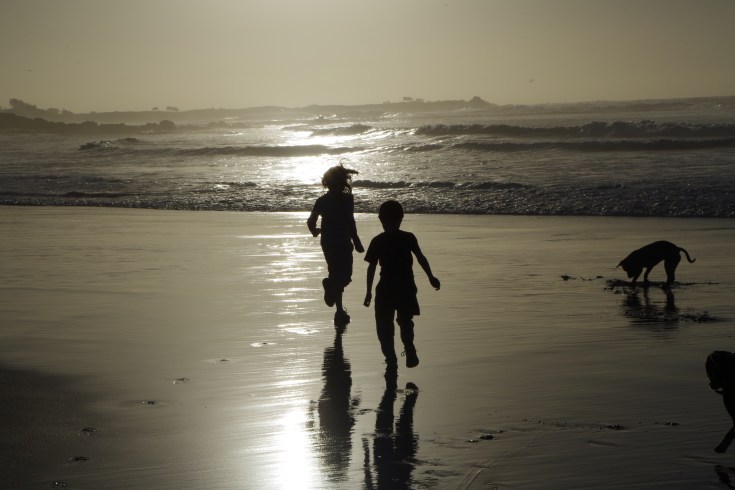
We are not orphans floating in a universe of emptiness. We are His. His children. And our heavenly Father’s great mission is to re-humanise humankind, to breathe life back into our empty souls and awaken again in us the irrepressible joy of being. Human. Imago Dei.
This broken world has a story for us to live in. Our scarred history has a story for us to live out. But God has a story that each one of us was born to live. The truly human story. The long story of grace.
Our long story with Him.
Journey Further
Who are you according to the messages you have received from others?
Who are you really, according to God?
References
1 Hay, David (2006) ’Something There. The Biology of the Human Spirit’ Darton, Longman and Todd Ltd pg 126-127 ISBN 0 232 52537 0
2 ‘Who Am I?’ by Deitrich Bonhoeffer
Discover more from The Long Walk to Calvary
Subscribe to get the latest posts sent to your email.

Leave a comment