Day 23
Look At The Birds Of The Air
I don’t know what your experience of worry and anxiety is. For me, when I’m feeling anxious about something I ‘churn’. I go over things again and again in my head like I’m an out of control merry-go-round carousel going nowhere but always spinning.
My worry doesn’t actually achieve anything at all, except drawing me inward in an ever increasing whirl. I suspect I am not alone in this.
God knows us. He knows we worry. A lot. So Jesus, on this hillside spends a long time talking it over with His listeners then and now.
His first antidote to our anxiety is to assure us that God is our Father and He is with us. (16 times including this verse). His second antidote is to help us see His love, grace and generosity in this world He created… to draw us back out of our own dizzied heads into our five senses again so we can sense His presence with us.
Here on this mountainside Jesus points His listeners back to the beauty of creation to remind them of God’s presence all around them and the message of lavish abundance written in everything God has made.
‘Look at the birds of the air; they do not sow or reap or store away in barns, and yet your heavenly Father feeds them. Are you not much more valuable than they? Can any one of you by worrying add a single hour to your life?’
Matthew 6:26-27
Jesus’ exhortation to move from fixation with our worries to open-eyed delight in God’s lavish creation is good medicine. In fact the role of nature in helping human beings process anxiety has gained an increasingly large body of research behind it.
Social scientists have discovered that spending time in the natural world God created for us strengthens our mental health and lowers both depression and anxiety. One study in the UK found that “44% of people said being close to nature makes them less anxious or worried.”* and another research report found that “Spending time in blue spaces and green spaces is linked to improved life satisfaction, reduced anxiety and increased happiness”** (McMahan & Estes, 2015).
This beautiful, abundant world God has created is good medicine for us because it all reflects back to us the generosity and love of our heavenly father.
Awareness of His presence, beauty, and extravagant goodness is not usually the place where we humans live.
Last June my son received a budgerigar for his birthday and he, ‘Bob’ has since become a much adored member of our family.
Twice we’ve had to leave him with others when we’ve needed to be away from home (once for three weeks and once again for a week). When we left him with a friend for three weeks this friend didn’t recognise the difference between empty seed shells in his feeding trough and actual seed, so she stopped adding fresh seed, thinking he had enough. She soon realised her mistake, but since this time Bob our budgie has had a particularly shrill cry around meal times that is unmistakable anxiety.
Another time we left Bob just for a weekend with full food and water provisions, but when we returned we found he’d started pulling out his own feathers in stress. Now, whenever we leave the room he has a certain shrill cry that lets us know he’d rather know we are around.
If Bob were in the wild he’d be flying freely with a huge flock of birds with all the abundant seed available in the Australian bush. Budgerigars live in the central Australian desert areas, and even in that dry environment they have all they need to live on. Of course now days, with predators and heat waves there are dangers there too, but I can’t help but feel that God’s provision is often better than ours.
I see our experience with caring for Bob as a bit of a metaphor.The worry-filled worlds we humans create for ourselves are nothing compared to the good world God created for us. All our striving self sufficiency is not actually sufficient.
Jesus’ invitation to trust God and not to worry assumes a very different perspective to that of the world. Jesus never instructs His followers to store up wealth for themselves, in order to ensure their own survival, but rather He encourages us all to live simply and generously, like birds who ‘do not sow or reap or store away in barns’ but rather receive all they need from God Himself… ’and yet your heavenly Father feeds them’.
Here on this mountainside Jesus draws our gaze away from our own internal whirring, and to God’s manifest goodness all around us… “Get out of your head and the whirl of your emotions and open your eyes and look around you! I am here. I am close. I am with you in everything that life throws at you this day. You are more valuable to me than birds, plants and everything else I have made. Your worries add nothing. Let them go and hold onto my hand. I am with you.”
This whole world is an object lesson in the generous goodness of God and His message of abundance is written into in everything He has made. So let’s get out of our own whirling heads and look up and out and all around us. Our God is good. His world is lavishly and abundantly good.
We have everything we need.
Look at the birds!

Journaling the Journey
Jesus’ invitation to trust God and not to worry assumes a very different perspective to that of the world. Jesus never instructs His followers to store up wealth for themselves, but to live simply and generously, like birds who ‘do not sow or reap or store away in barns’ but rather receive all they need from God Himself… ‘and yet your heavenly Father feeds them’.
What changes would you need to make in order to live ‘simply and generously’?
What attitudes to wealth, security and comfort would you need to work on in order to trust God more fully with your life and wellbeing (and that of your family)?

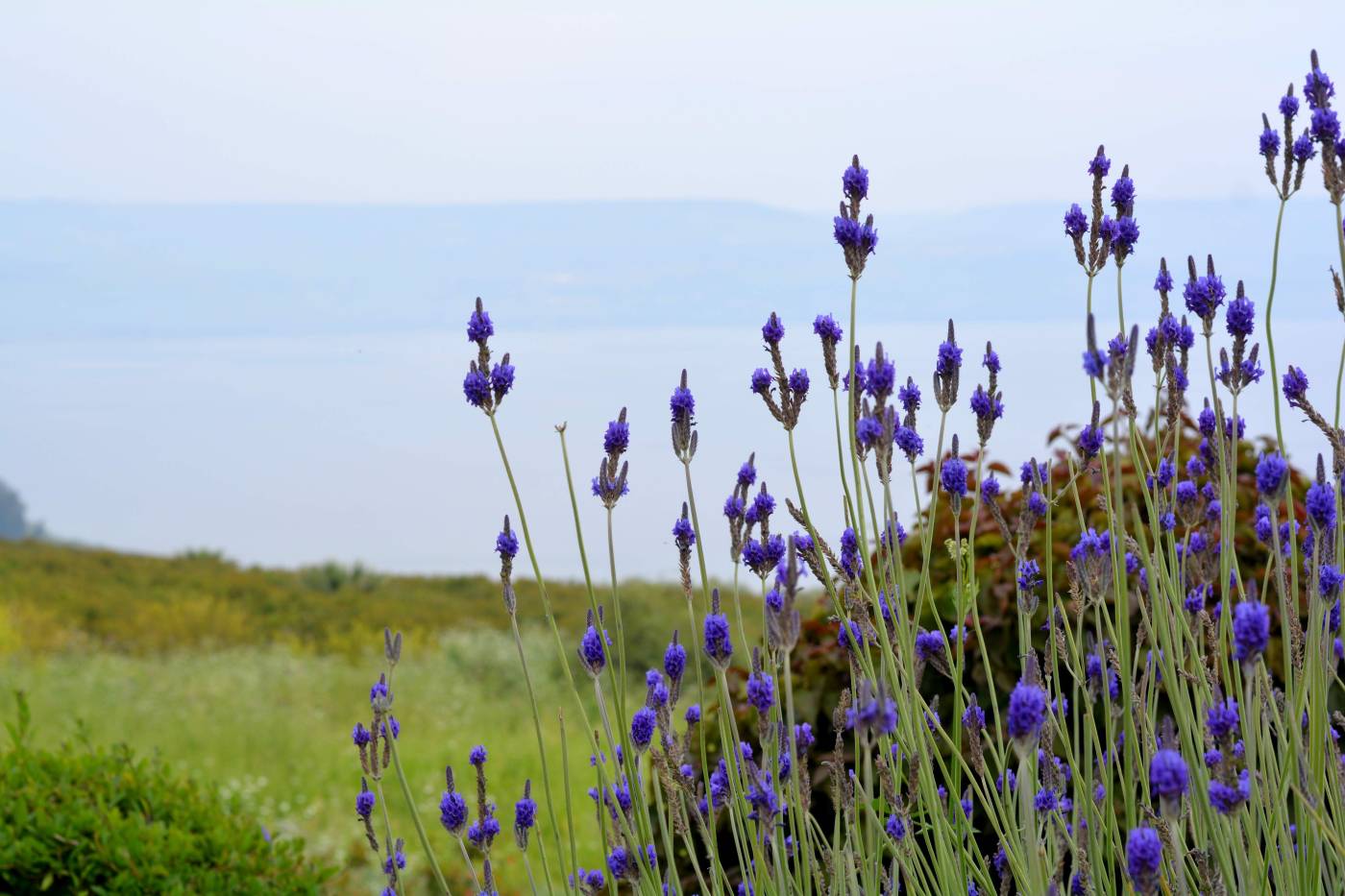
Today’s hillside photograph was taken from the hills overlooking the Sea of Galilee in Israel by Dan Evenhuis.
References
Mental Health Foundation, UK, ‘Nature and Mental Health’
McMahan, E. A., & Estes, D. (2015). The effect of contact with natural environments on positive and negative affect: The Journal of Positive Psychology, 10(6), 507–519.
Discover more from The Long Walk to Calvary
Subscribe to get the latest posts sent to your email.

Leave a comment