Day 11
Patterns of Grace
Abram, his name meant ‘exalted father’.
But he wasn’t.
A father.
He and his wife Sarai had been unable to conceive. In our day that means sadness, in those days it also meant disgrace and an uncertain foundation for a marriage. It also meant a dead end for a family line. How could a blessing to ‘become a great nation’ be fulfilled with no children? No descendants? No bloodline heirs? No hope?
But… “Against all hope, Abraham in hope believed” (Romans 4:18).
“After this, the word of the Lord came to Abram in a vision:
“Do not be afraid, Abram.
I am your shield,
your very great reward.”
But Abram said, “Sovereign Lord, what can you give me since I remain childless and the one who will inherit my estate is Eliezer of Damascus?” And Abram said, “You have given me no children; so a servant in my household will be my heir.”
Then the word of the Lord came to him: “This man will not be your heir, but a son who is your own flesh and blood will be your heir.” He took him outside and said, “Look up at the sky and count the stars—if indeed you can count them.” Then he said to him, “So shall your offspring be.”
Abram believed the Lord, and he credited it to him as righteousness.”
Genesis 15:1-6
It would be 25 years from the time God first promises Abram that he will become ‘a great nation’ to when he will hold the newborn Isaac in his arms. God is speaking to Abram throughout this time but 25 years is a desert plod length of time to wait.
Sarai remained childless for 25 long turns around the sun after God’s first promise to bless them. And she would have felt the absence of a child long before the promise arrived. Barren. Empty. Where a child should have been there was nothing. And barrenness for a woman at that time, well it made you feel like nothing. So Sarai (like Eve) decided to take things into her own hands and led her husband to do likewise. She reached for the right thing in the wrong way, the impatient way. She reached for the very thing God had promised before God’s hand had provided it.
‘Now Sarai, Abram’s wife, had borne him no children. But she had an Egyptian slave named Hagar; so she said to Abram, ‘The Lord has kept me from having children. Go, sleep with my slave; perhaps I can build a family through her.’
Abram agreed to what Sarai said.’ Genesis 16:1-2
‘The Lord has kept me from having..’ Sarai’s words hang on the air of history, clanging against the story of all that God eventually did in their lives. She did not yet have the benefit of hindsight, of experience with God, of faith.
And this ‘perhaps’ business. There might be a ‘perhaps I can..’ but there isn’t a ‘perhaps God can’. There is no haphazard ‘perhaps’ no make-shift plan of God. There is no perhaps, no maybe-maybe not, no cross-your-fingers hoping, no striving to make it real. If God says it, it is already is real. There is no perhaps in God’s Kingdom. Only confidence in what is hoped for and assurance in what we do not see (Hebrews 11:1).
We don’t have to hustle. We just have to trust and wait.
But waiting, well, it can feel like a desert plod and when your yearning-thirst for your childless arms to be filled takes hold… Sarai, like the rest of us, was still learning to trust this God. Sarai saw the absence, the emptiness of her womb, the absence of a child, the absence of a family, the absence of hope. She didn’t wait long enough to see that the absence would become the presence, the wonderful presence of God’s hand giving this child against all odds. The miracle.
Silence can feel like an absence of God. But the truth is God is always present and wants us to see clearly that it is not circumstance or our own striving that gives us good gifts, but His hand alone. And His gifts are often seen most clearly after an absence, like an oasis in a desert, like a long cool drink after a dehydrating wait, like a child finally born from an ageing barren womb.
Any fit young person can have a baby… but a baby born to remarkably ageing parents? That alone is a gift from God. Remarkable. How would it be a sign that they are called, chosen and blessed if it was no different to any other pregnancy on earth? This pregnancy was a supernatural gift, not a natural one. And the pain of patience was going to be rewarded one-day with the joy of laughter.
But then, right then in that moment right there beneath Sarai’s feet in all the absence and the longing and the nothingness and fading hopes… all Sarai could see was the lack, and so she reaches for the right thing (God’s promise) in the wrong way. And it costs. Not just her, but Hagar and Abram and not-yet-born-and-not-his fault Ishmael. It will cost Ishmael his bond with his father and Abram his bond with one son.
Their family becomes broken with bitterness, blaming and eventually the abandonment of one child.
“So after Abram had been living in Canaan ten years, Sarai his wife took her Egyptian slave Hagar and gave her to her husband to be his wife. He slept with Hagar, and she conceived.
When she knew she was pregnant, she began to despise her mistress. Then Sarai said to Abram, “You are responsible for the wrong I am suffering. I put my slave in your arms, and now that she knows she is pregnant, she despises me. May the Lord judge between you and me.”
“Your slave is in your hands,” Abram said. “Do with her whatever you think best.” Then Sarai mistreated Hagar; so she fled from her.” Genesis 16:3-6
And it played out just like Genesis chapter three, the reaching, the taking. Sarai reaches, Abram concedes and takes, everyone suffers. Sarai didn’t know, didn’t yet fully understand. This God. This God who is powerful beyond measure and faithful beyond comprehension. She thought she had to hustle. She thought that nothing in her womb meant she was nothing in God’s plan. Nothing in God’s heart. She couldn’t have been more wrong. She didn’t yet understand who God was. And she didn’t understand who she was. Her husband had lied, asked her to lie and then let her be taken away by other men (Genesis 12:10-20) and he would do the very same thing again (Genesis 20:1-18). It was God who had been faithful to Sarai when Abram wasn’t. It was God who intervened both times on her behalf. Abram was a man who called on the name of the Lord, but he wasn’t perfect. Both he and Sarai were still hustling.
But God. God is merciful. He works with where we are at. He picks through the rubble of our hustling brokenness and re-weaves His love into every broken thread, His love binding the broken threads of our stories back together.
And this is what we see repeatedly between the lines in Abram and Sarai’s story again and again and again, weaving up and down and in and out. Abram messes up but God sets things right. Sarai acts in brokenness but God works for redemption.
“The angel of the Lord found Hagar near a spring in the desert; it was the spring that is beside the road to Shur. And he said, “Hagar, slave of Sarai, where have you come from, and where are you going?” Genesis 16:7-8
God found Hagar. There is no mention in the story of anyone but God searching her out. He found her where she was, lost in hurt and grief, and He helped her find herself. “Where have you come from and where are you going?” Where are you Hagar?
“I’m running away from my mistress Sarai,” she answered.” Genesis 16:7-8
God saw. God knew. He had just named where she’d come from- “Hagar, slave of Sarai”, but Hagar needed to name it for herself; the pain the hurt, the lack of choice, the mistreatment, the inequality and injustice. God knew where she had come from. He saw. Everything. He saw where she was, hiding by a spring in the desert, thirsting for relief from the desert life she was fleeing. He also saw where the road she was on would take her, a woman wandering alone in the desert. She was vulnerable.
God sees everything, where we have come from and where we think we’re headed. He also sees what we don’t want to see. He sees that sometimes the road forwards is actually the road behind us, sometimes returning is actually advancing, pressing on and pushing through, finding the courage to move towards the unfinished business in our past.
“Then the angel of the Lord told her, “Go back to your mistress and submit to her.” The angel added, “I will increase your descendants so much that they will be too numerous to count.”
The angel of the Lord also said to her:
“You are now pregnant
and you will give birth to a son.
You shall name him Ishmael,
for the Lord has heard of your misery.”
Genesis 16:9-12
Going back is sometimes going forwards when we take the journey with Him, the One who sees us.
‘She gave this name to the Lord who spoke to her: “You are the God who sees me,” for she said, “I have now seen the One who sees me.” That is why the well was called Beer Lahai Roi; it is still there, between Kadesh and Bered.’ Genesis 16:14
God sees. God hears. God Himself takes the broken threads of Abram’s and Sarai’s broken choices, the bruised and fraying broken heart of Hagar, and rethreads a new story, taking the cords of brokenness and reweaving them into a new picture, a renewed tapestry woven with threads of broken human choices and God’s own redeeming threads of mercy.
“So Hagar bore Abram a son, and Abram gave the name Ishmael to the son she had borne. Abram was eighty-six years old when Hagar bore him Ishmael.” Genesis 16:15-16
Ishmael’s name means “God hears”. Because He does. Ishmael is the first child in the Bible to be given his name, not by humans, but by God. God met Hagar on the road when she ran away in pain and He counselled her, saw her, respected her and restored her to her family. God sees and hears our pain.
Before Ishmael was born into the messiness of his family’s brokenness God set out a path before him for restoration and a future. God hears Ishmael’s cries and is with Him as he grows up, rejected and fatherless because of Sarai’s choices (Genesis 21:17-20).
God sees and hears the pain we live in, in the womb of this unravelling world, and He weaves His grace around us to restore us to ourselves. This God sees. This God hears.
And this God fulfils His all His promises. Even when we fall short, He remains faithful. Gracious… full of grace.
“Now the Lord was gracious to Sarah as he had said, and the Lord did for Sarah what he had promised. Sarah became pregnant and bore a son to Abraham in his old age, at the very time God had promised him. Abraham gave the name Isaac to the son Sarah bore him. When his son Isaac was eight days old, Abraham circumcised him, as God commanded him. Abraham was a hundred years old when his son Isaac was born to him. Sarah said, ‘God has brought me laughter, and everyone who hears about this will laugh with me. And she added, “Who would have said to Abraham that Sarah would nurse children? Yet I have borne him a son in his old age.”’ Genesis 21:1-6
Isaac. It means laughter. And how they must have laughed with breathless incredulity and eye shining joy.
‘Now the Lord was gracious to Sarah….’ ‘the Lord did for Sarah what he had promised…’. For Sarah. For Sarah who had been left barren for so long, who’d made all the mistakes with Hagar and lived with bitter resentment.
The Lord was gracious and filled all Sarah’s emptiness with the fullness of a full womb and the fullness of an over brimming heart. A heart now overflowing with joy and love for this one small person who was the fulfilment of all her once tear-filled now thanks-filled prayers. Sarah, she was learning that God is always faithful. Even when we are not. She was learning who God is: Undeserved grace.
God had made it personal with Abraham and his whole family. Because when Abraham chose to obey and follow God, to walk with Him, to live with Him, making his home in God’s reality rather than his own broken and limited view of reality, God became part of Abraham’s family, the third strand in Abraham’s and Sarah’s marriage fighting for their unity when Abraham didn’t (Genesis 12:10-20, 20:1-18), providing a child for Abraham and Sarah when they couldn’t (Genesis 21:1-7), seeing and caring for Hagar when Sarah hadn’t (Genesis 16:1-16), watching over Hagar and Ishmael when Abraham and Sarah didn’t (Genesis 21:8-21).
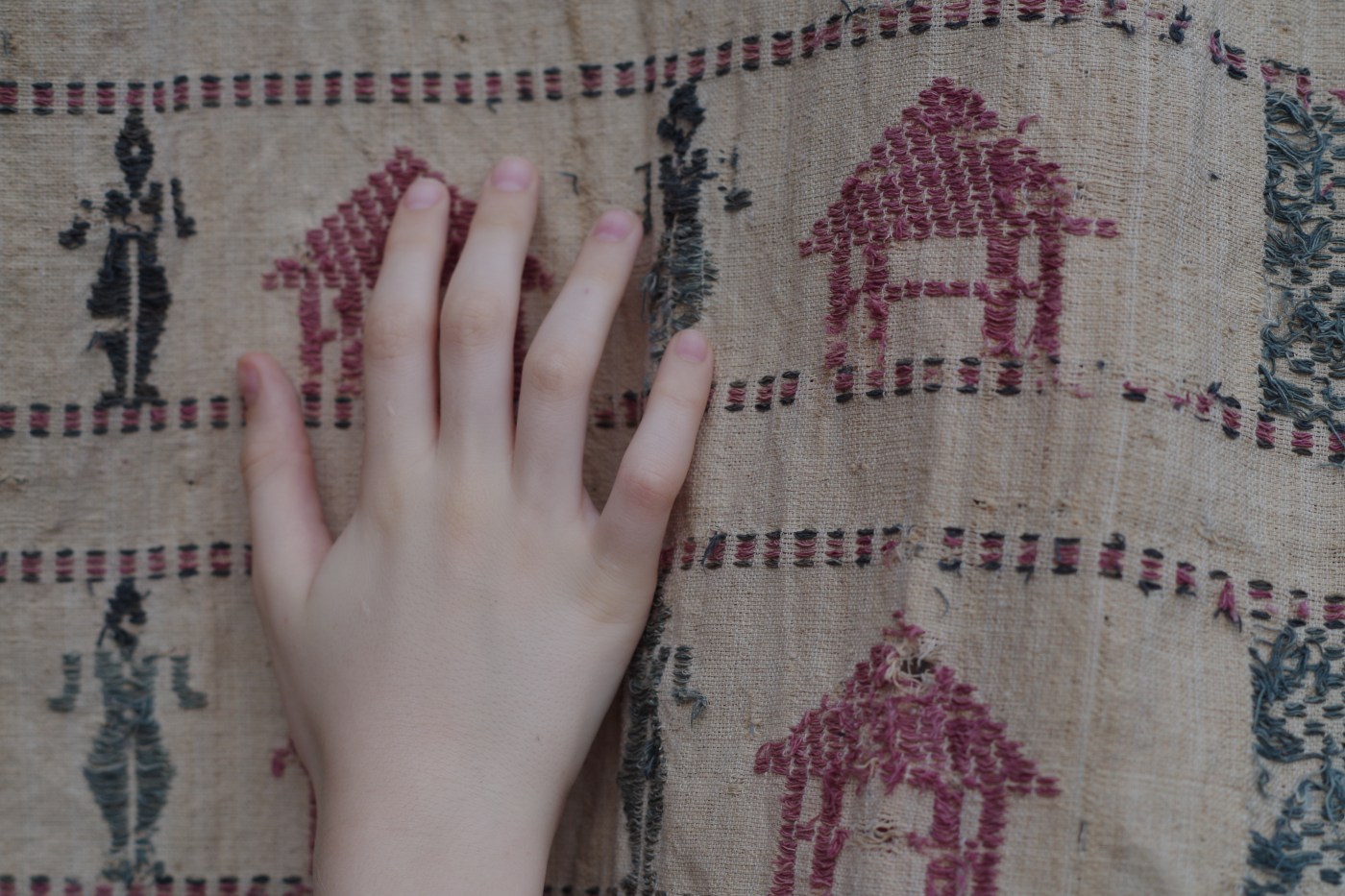
God had walked with them, partnered with them, blessed them and cared for them, threading together the tapestry of all the thousand ways He’d loved them, providing patterns of redemption woven with strands of light, a tapestry woven in gold and goodness, grace and givenness. All these patterns of grace in a life weaving restoration.
God was the strengthening strand in their family line, weaving their broken threads with His whole ones. The author of Ecclesiastes wrote ‘a cord of three strands is not quickly broken’ (Ecclesiastes 4:12). A cord of three strands of which one is God will never break. It will become a lifeline through many generations.
It is not attentiveness to one another which strengthens a marriage, but attentiveness to God. When we find our strength in the healing, counselling, steadfast love of God we find the grace and strength to truly love each other. We love because He first loved us (1 John 4:19). And He is more faithful to the unity and wholeness of our marriages, families, relationships and communities than we are. He is a loving Father. A trustworthy partner in life. A faithful and committed friend.
In this sacred tapestry of life, when the dark threads are woven alongside light ones, when tears and laughter are entwined together in one long breath of being, He is there with us, singing, threading, weaving, not as the great weaver removed from all we are, but right there with us, among the threads, part of our essential human ecosystem, the Breath of life within us, constantly whispering our names, calling us into ourselves, reminding us who we are long after we’ve forgotten.
God longs to walk with us, partner with us, bless us and care for us, threading together the tapestry of all the thousand ways He loves us, providing patterns of redemption woven with strands of light, a tapestry woven in gold and goodness, grace and givenness.
All the patterns of grace in a life.
“And by faith even Sarah, who was past childbearing age, was enabled to bear children because she considered him faithful who had made the promise. And so from this one man, and he as good as dead, came descendants as numerous as the stars in the sky and as countless as the sand on the seashore.”
Hebrews 11:11-12

Journey Further
Where in your life have you seen God weaving redeeming patterns of grace?
Where are the fraying edges in your life that still need His restoration?
Discover more from The Long Walk to Calvary
Subscribe to get the latest posts sent to your email.

Leave a comment